01
Stop the −26 bb/100 leak
See exactly why your default game loses in Squid, and how the EV math flips once folding has a price.
 J Poker School
NL Squid · Strategy course
Squid punishes folding, so the game that wins everywhere else loses here by default. Learn the exact preflop, postflop, and exploit adjustments, and turn the table's dead money into your win rate.
new Multilingual subtitles available
The cost of doing nothing
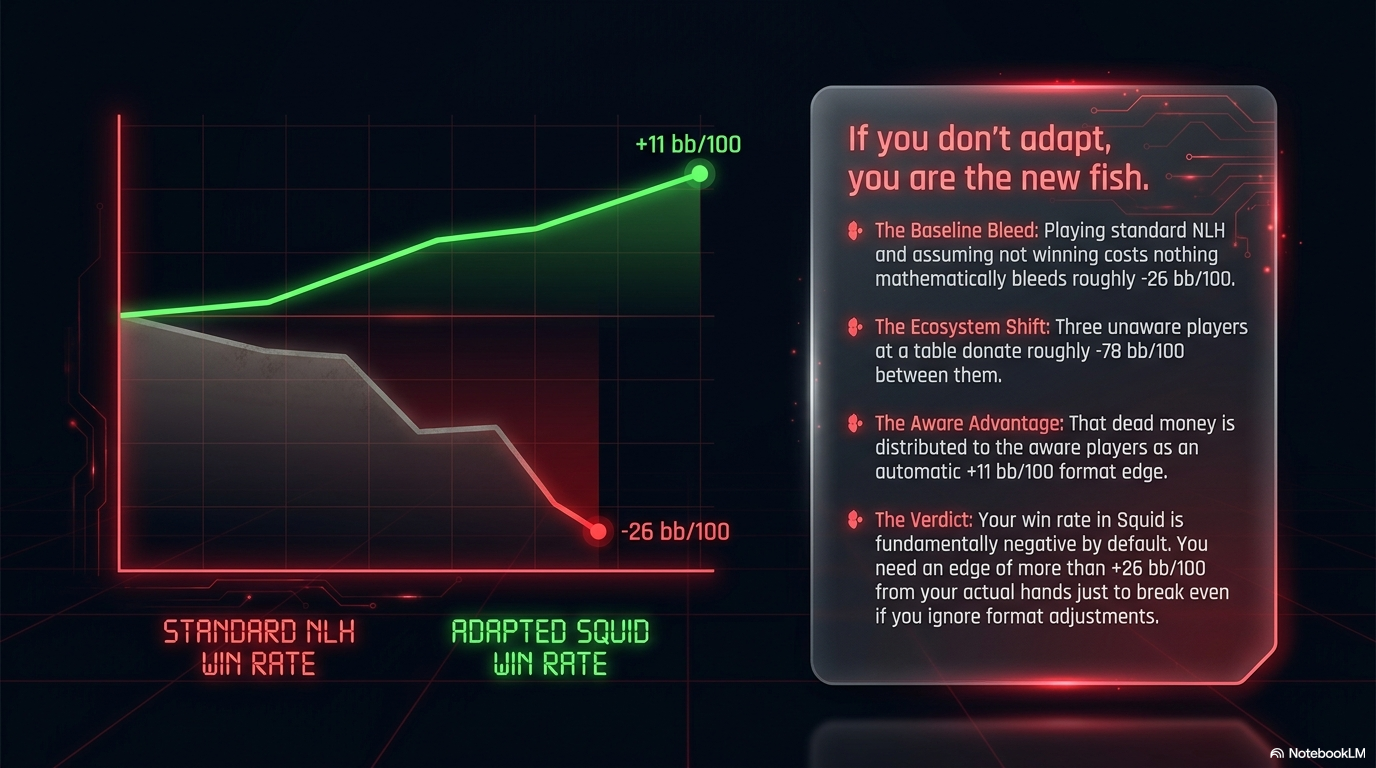
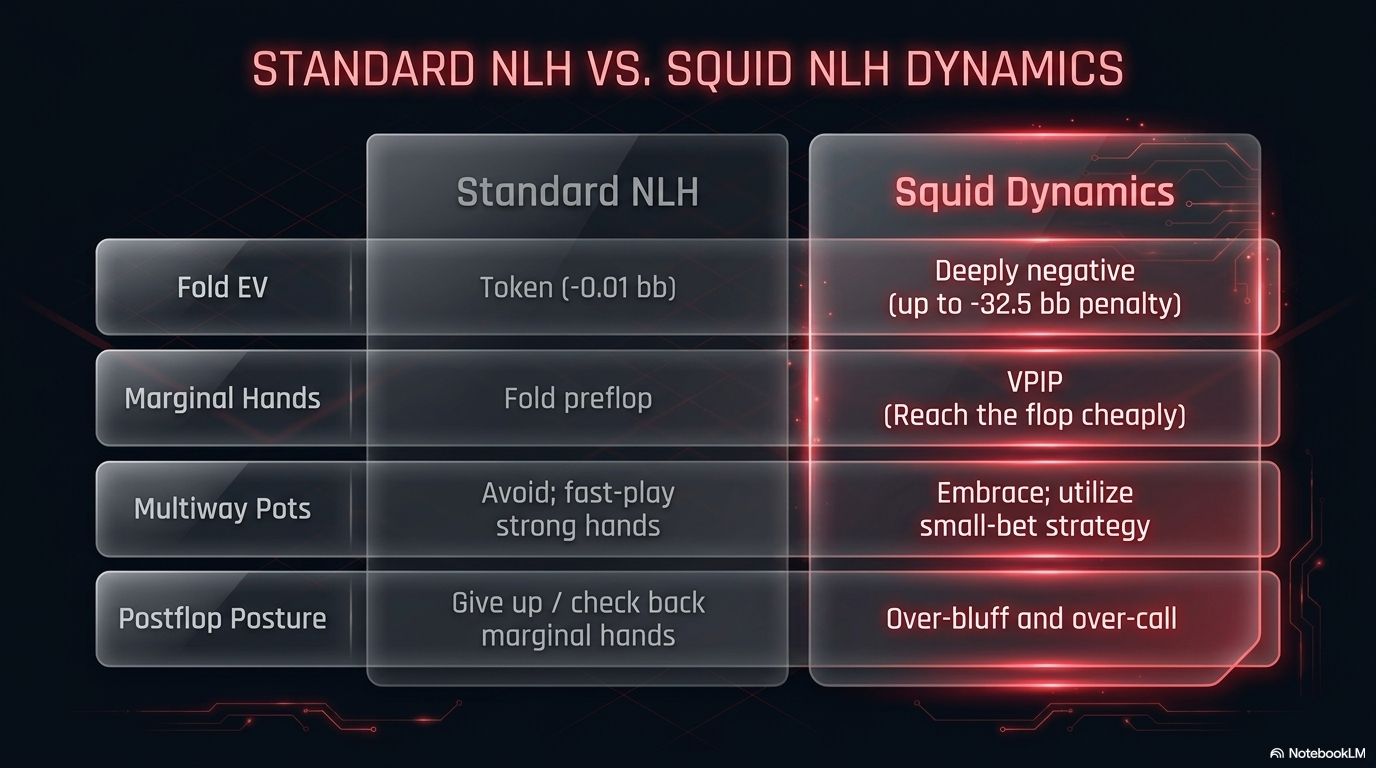
Squid punishes folding. That one rule changes the math of every decision, and your normal winning strategy starts leaking from the first hand.
What standard NLH loses in Squid before you make a single mistake.
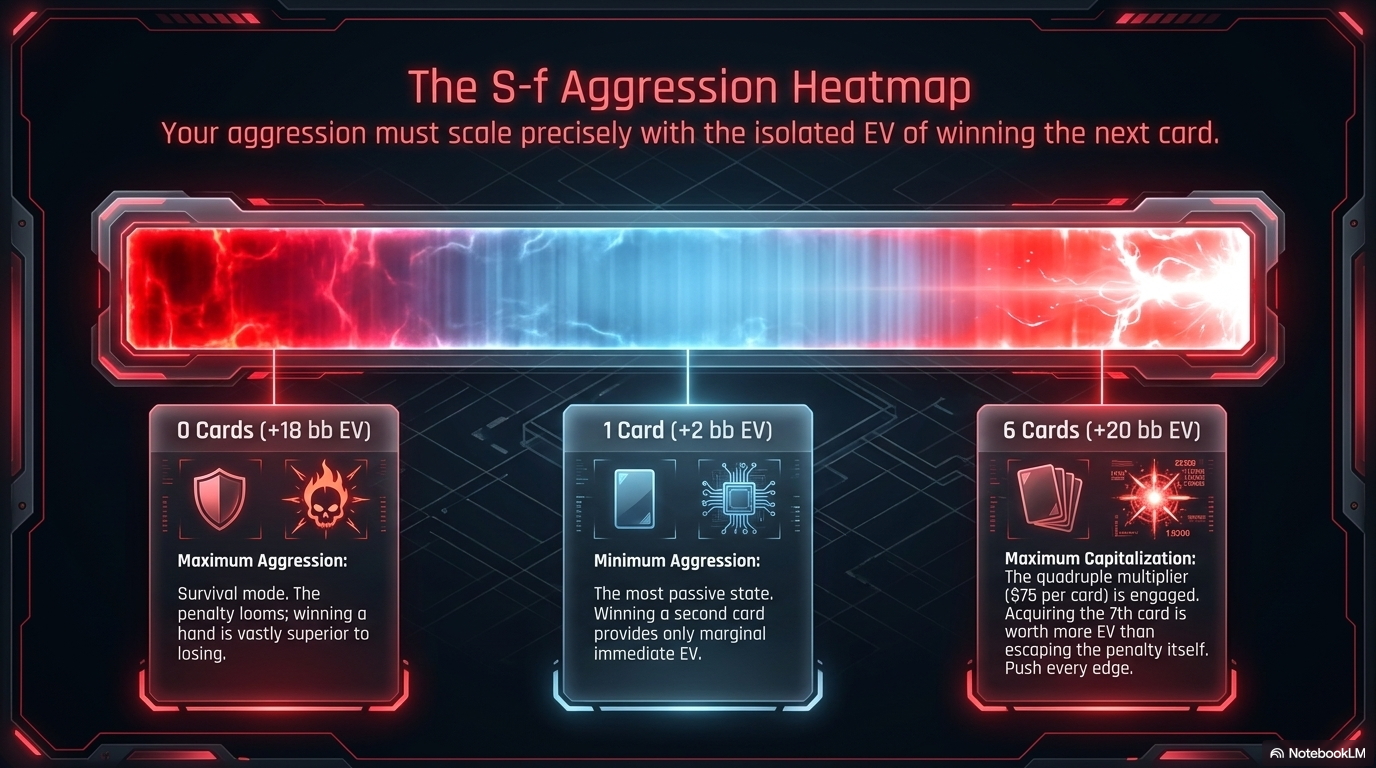
The worst it can cost you to fold a single hand.
The dead money the format creates. It goes to whoever adjusted first.
You need a real edge from the adjustments just to break even. Ignore them and the table keeps eating.
What changes for you
01
See exactly why your default game loses in Squid, and how the EV math flips once folding has a price.
02
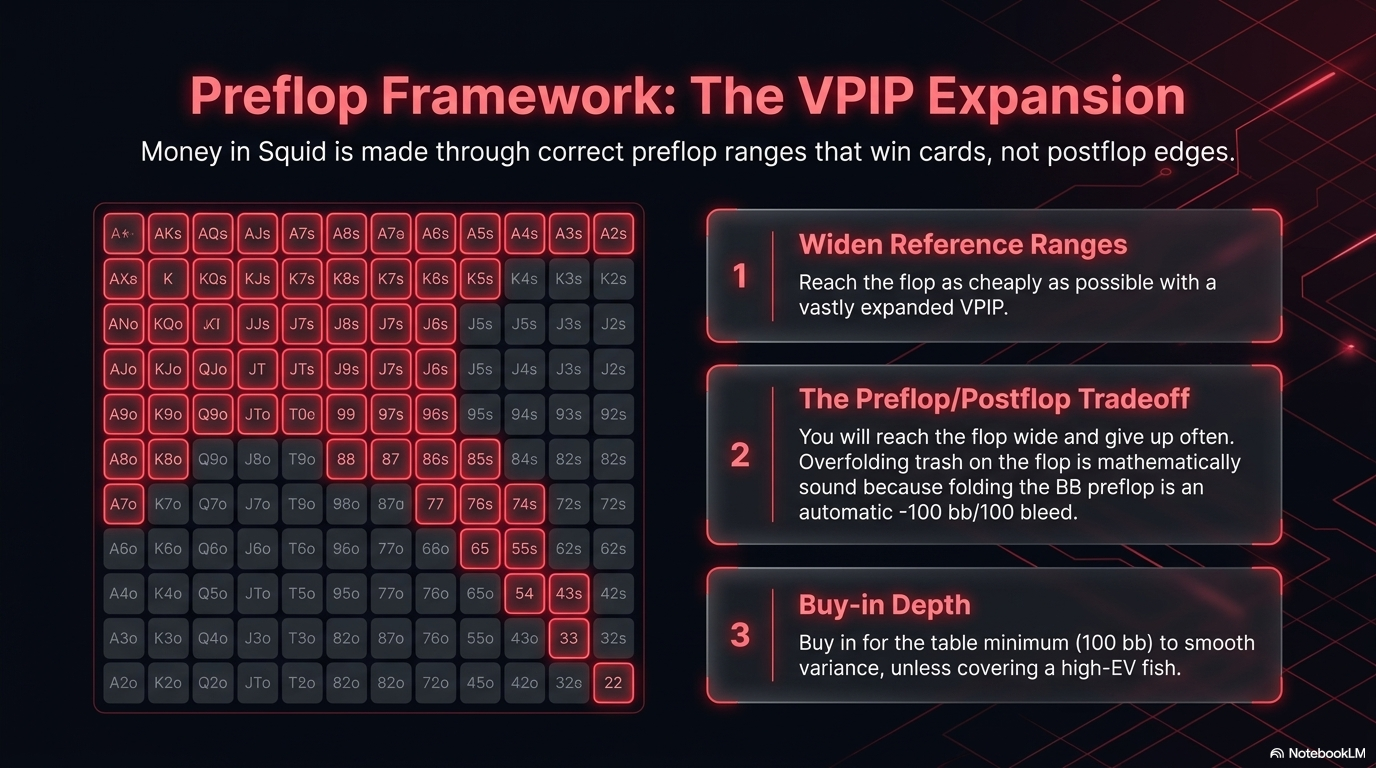
The VPIP expansion and the math behind it, so you can rebuild ranges from principle instead of memorizing charts.
03
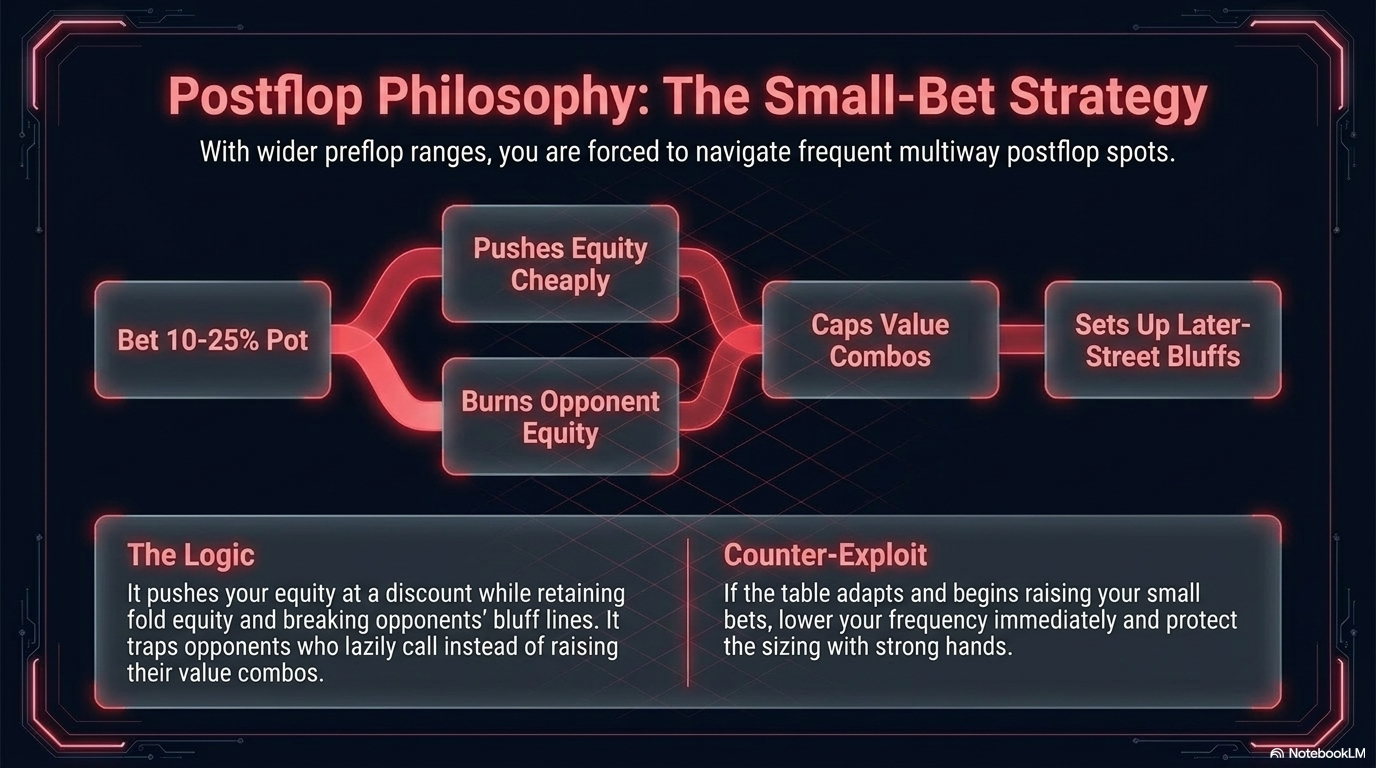
The small-bet system for Squid's multiway, small-pot spots: push your equity cheaply and burn theirs.
04
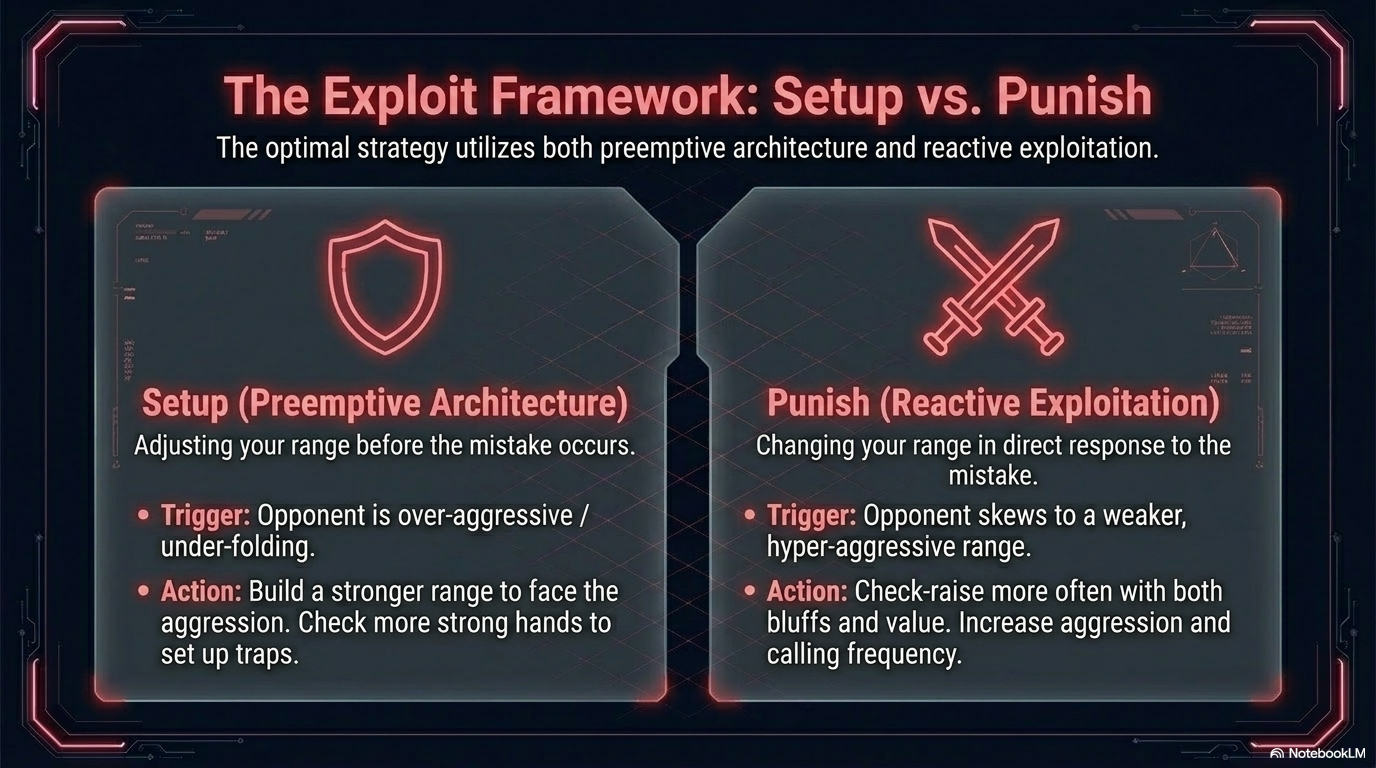
The setup vs punish framework to dismantle the rare adjusted reg, and feast on everyone still on autopilot.
Who's teaching this
If your solid NLH game suddenly bleeds in Squid, that's not you running bad. The format is built to punish your old reflexes.
We sat in those pools, watched a winning strategy leak, then rebuilt it from the format's actual math instead of guessing.
How it works · The Squid Adjustment
Widen your VPIP and stop folding indifferent hands. The format breaks every EV tie toward action.
Run the small-bet game built for shallow, multiway Squid pots: cheap pressure that denies their equity.
Use setup vs punish to beat the rare adjusted reg and collect from everyone still on autopilot.
Inside the framework
A look at the system you'll learn: the format math, the preflop expansion, the small-bet postflop game, and the exploit map.
What you get
Video
Essential Squid-format concepts walked through from preflop to river. Annotated examples, not slide-reading.
Document
Preflop calculations and range-building explained. The math behind every chart so you can rebuild ranges in any spot variant.
Visual Summary
A simple visual breakdown of the most important concepts and ideas from the course. Available immediately.
Your language
Multilingual subtitles available on request — just send us a message and specify the language you want
NL Squid · Strategy course
Lifetime access · instant delivery · Multilingual subtitles available.
Get the courseCrypto and bank transfer accepted. Contact us for details
After the course
You stop paying the fold penalty and start collecting it. You become the aware player with a clear, math-backed edge, in a pool where most people are quietly losing.
Get the courseWho it's for